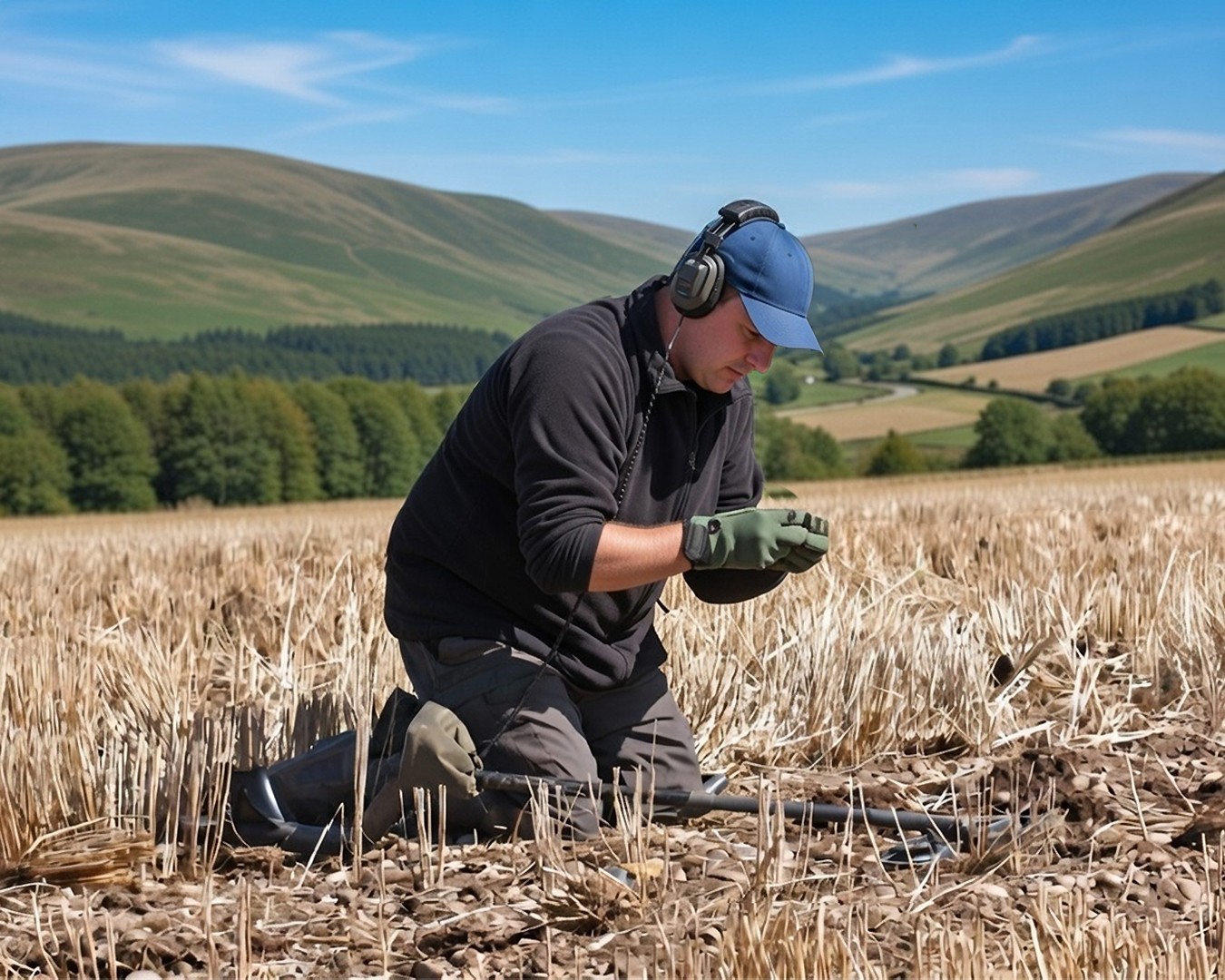
Metal detecting mistakes to avoid
Let's break down some metal detecting mistakes to avoid so that you can make more finds and eliminate time wasted.
Not defining your goals prior to choosing metal detecting equipment
Goal considerations:
- Decide which areas you want to search, inland, woodland or beach.
- What type of targets you wish to search for, coins, relics, hoards?
Not having permission for the area you search.
Private and protected land will require permission. Owners and government bodies do make an effort to enforce keeping things legal. It is not worth the risk simply detecting on land which you are unsure if permission is required.
Skipping research.
Heading out without researching the background of your location. This could lead to scanning land void of worthy finds for hours. Available resources you may consider are old maps, town history records, historical societies, and Google Earth overlays will also provide valuable information.
Ignoring Accessories
Accessories seem like something of secondary importance until you are out on the field and realize how crucial they actually are.
- Invest in a quality pin pointer to isolate a target while digging, this will save you time.
- Good digging tools, both a hand shovel to assist in recovering shallow targets, pinpointing ones close to recovery and a spade which can withstand difficult to remove ground.
- Quality headphones
- High grade batteries
Not studying the user manual thoroughly
As simple as this seems, a lot of users either start by randomly tweaking functions or briefly scan the user manual. Thorough study of the user manual will provide you with the information you need to know exactly what to do.
Not reaching out to the official customer service for support
Users often ask advice only from other users and in the process may receive misinformation or advice based on guesswork or that is tainted by personal preference. It's best to reach out to the manufacturer's own customer support through their own social media, support networks or by direct contact.
Ignoring correct and sufficient ground balance.
The correct ground balance of your detector is essential to compensate for soil conditions like mineralization, salty beaches, and to deal with things like hot rocks which can interfere with signals. It's also important to reset ground balance once you move to a different location or the soil type changes during search.
Incorrect and careless digging technique
Digging straight down the center of the signal may destroy the target and render it valueless. Digging before properly pin pointing the location and messy holes with multiple dirt piles will cause time waste.
Ignoring settings.
Adjust sensitivity and discrimination which will reduce noise and false targets. When changing search coil size and frequency, the settings need to be readjusted.
Nexus Metal Detectors
