Cleaning methods for ancient coins
This is a basic guide on safe methods used to clean ancient coins which will preserve their value.
Prior to proceeding to what involves invasive procedures or chemicals, do a patch test on a small and less visible area of the coin.
Ancient coins often have a patina. This is an oxidized metal coating. It comes in different colors such as green, blue and red. The patina adds historical value and should be preserved by working both cautiously and slowly.
Water rinse
Coins can be rinsed with water and the temperature should be lukewarm. This will help remove loose dirt. It's recommended to use distilled water, which would not contain chemicals that might be reactive.
Soaking
Leave the coin to soak in distilled water and change the water daily. This will further loosen surface dirt.
Brushing
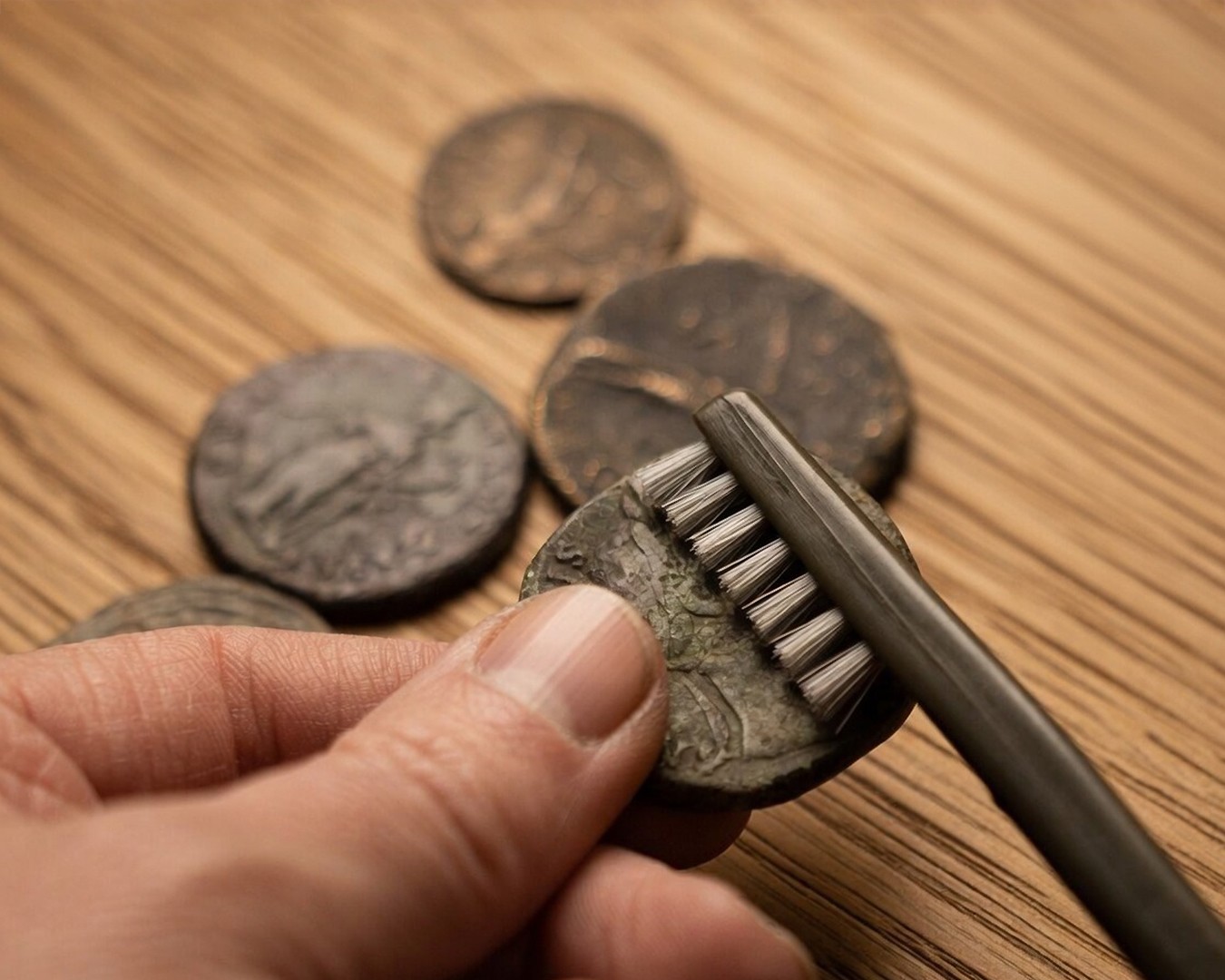
A soft toothbrush or a small paintbrush with soft bristles can be used to gently scrub the coin.
Scraping
A toothpick or bamboo skewer is useful for gentle scraping of more stubborn dirt. Caution is advised, as any rough handling can scratch the coin.
Further soaking
Olive oil can be used to soak the coin further, for this time is required, anything from several weeks to months. The olive oil will loosen the dirt coating and deposits. This should be followed
by soaking in mild soap and gently brushing with a soft brush.
Bronze, copper and brass coins can benefit from this method, however it will likely be a waste of time for gold, silver and nickel.
Ultrasonic
An ultrasonic cleaner is a cost effective method. This process involves ultrasound (in a specific frequency in kHz) to agitate a fluid. Work in small time increments, as there’s no set rule to what length of time will have the best effect.
Electrolysis
This method uses a low-voltage electric current. Equipment to perform this type of cleaning is required and someone with knowledge.
Chemicals
Acetone, hydrogen peroxide and specialized cleaning solutions are some of the available options to chemically clean the coins. Following, thorough water rinsing is required.
Once cleaning is complete, you should consider the storage container and temperature in which the coins are stored, as these can affect how well preserved it will stay over time.
